Latest Products
Showing posts with label Seals. Show all posts

Ringed Seal

Order Detail
 

The Life of Animals | Ringed Seal | The ringed seal is the smaller and more common in the Arctic, with a small head, short muzzle like a cat and a plump body. The ringed seal taxonomy is discussed and reviewed in the literature. The ringed seal is very near the Caspian seal (P. caspica) and Baikal seal (P. sibirica), they all have the same relative sizes small, the functions of cranial morphology and affinity for ice actions.The closest phylogenetic relatives ringed seal, gray seal (Halichoerus grypus) and species in the genus Phoca (seals and sealing largha) when ringed seals were attributed above. along with the other northern latitude ice seals (seal, bearded seal, seals and hooded seals), these seals of the subfamily Phocinae


Ringed seals occur throughout the Arctic. You can, in the Baltic Sea, the Bering Sea and Hudson Bay. They prefer to rest on ice floe and continued north on thicker ice. In all the seas of the Arctic in the North Pacific, are found in the southern Bering Sea and range found as far south as the Seas of Okhotsk and Japan. In the assortment ringed seals have an affinity for ice-covered waters and ice to fill seasonal and permanent are great.


Distribution in Alaska Ringed seals in the Beaufort, Chukchi and Bering Sea, south of Bristol Bay in years of extensive ice cover. At the end of April to June ringed seals are distributed throughout their range from the south to the north of the ice edge. The preliminary results of recent studies in the Chukchi Sea in May and June were conducted in 1999 and 2000 indicate that ringed seal density is higher in the ice along the coast and fast package, and lower on sea ice. Ringed seals are found in Arctic waters and often with icebergs and ice, ringed maintains a hole in the ice to breathe so use the ice habitat is not connected, the other joints.Ringed seals are an important food source, especially for the polar bears. Early Paleo Eskimo sites in the Canadian Arctic ringed seals signs harvested from about 4000-3500 BP, probably frozen tears and bears trapped in the ice, with an option for adolescents and young adults.


The bycatch in fishing nets, trawls and trade is another threat to ringed seals. Climate change is the greatest potential threat to ringed seal populations because much depends on their habitat Birthing ice caves are often destroyed before the seal is able to feed itself in a poor physical condition was.
Find The Life of Animals
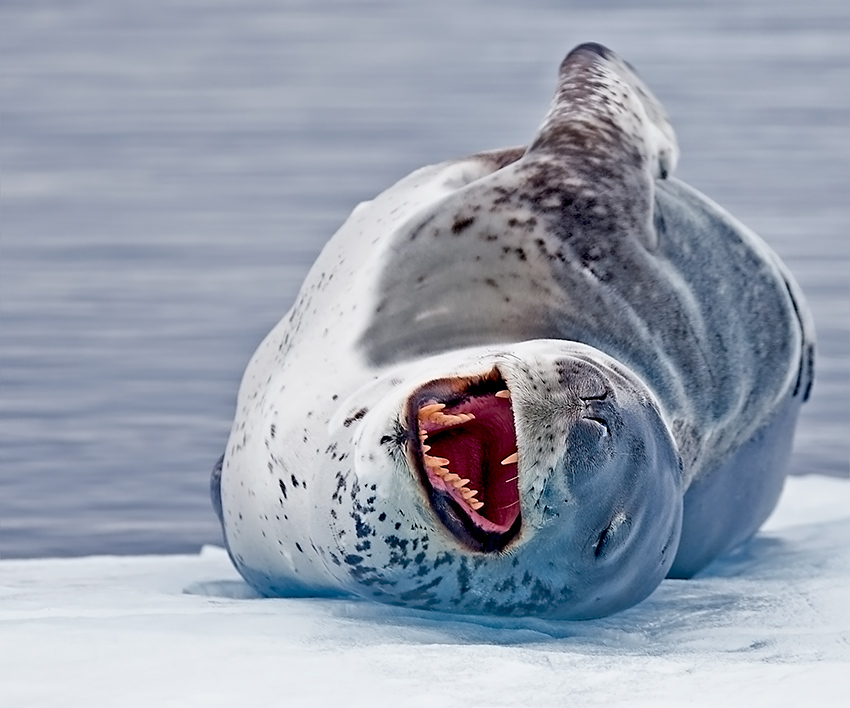
Leopard Seal

Order Detail
 

The Life of Animals | Leopard Seal | The leopard seal is tall and muscular, with a dark gray back and gray on its belly. Females are slightly larger than the males. The front teeth are sharp as those of other carnivores, but their molars lock together in a way that allows them to sieve krill from the water, so that the seal crabeater seal. The leopard seal lives in the cold waters around Antarctica. Young people are frequently in the north. The leopard seal is a solitary creature, and met in small groups only when it is time to mate.


The leopard seal is bold, powerful and strange. In water, there's a fine line between curiosity and predatory behavior, and can "play" with the penguins did not intend to eat. There are also records of leopard seals attack divers. The leopard seal is only orca among the top predators of the Antarctic. The smaller seals probably eat mostly krill, squid and fish too. Larger leopard seals probably switch to krill prey more significant, including King, Adelie, Rockhopper, Gentoo and Emperor penguins, and, less frequently, other seals as crabeater seal gasket.


Subantarctic islands around the South Georgia, the Antarctic Fur Seal (Arctocephalus gazella), the main prey. Other prey includes fish and penguins. Antarctic krill (Euphausia superba), Southern Sea Elephant (Mirounga leonina) pups of penguins and other seabirds were in leopard seal faeces were found in small quantities When hunting penguins, leopard seals patrol the waters near the edges of the ice almost completely under water, waiting for birds to reach the sea.


It Previous reports with the leopard seal skins its prey before feeding proved to be false. Lack the teeth needed to cut its prey into manageable pieces, puts his prey from side to side to rip and tear into smaller pieces. The leopard seal is classified as part of the family Phocidae. Its closest relatives are the Ross seal, Weddell seal and crabeater seal, the lobodontine together as the seals are known. The proportion of leopard seals with homologous with one's close relatives lobodontine's seals. Although colors vary between these types of seals, coat color has the same function, the better camouflage from predators and as prey is hiding.


Find The Life of Animals
 
Support : Creating Website | Johny Template | Mas Template
Copyright © 2011. Stock Image - All Rights Reserved
Template Created by Creating Website Published by Mas Template
Proudly powered by Blogger